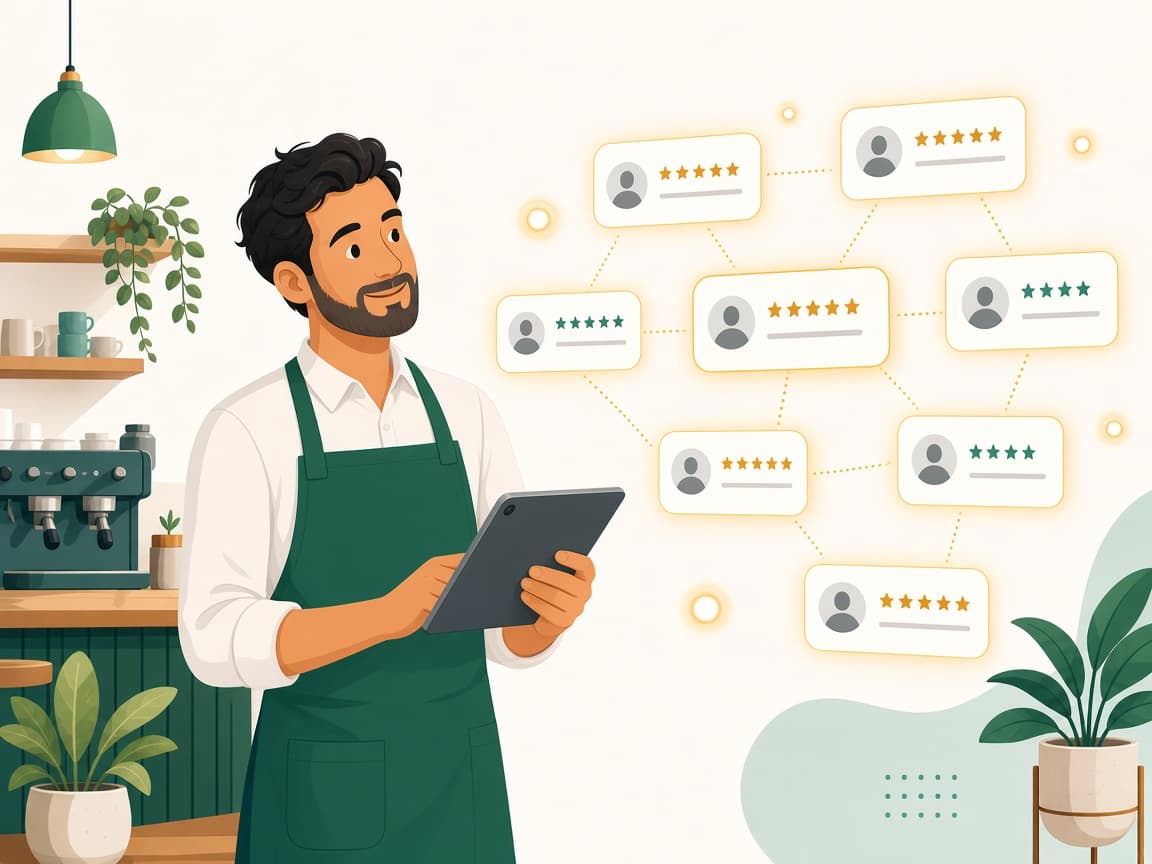
Your customers already use AI. They ask a chatbot where to get coffee. They compare three yoga studios before they book. They paste a restaurant's reviews into a tool and ask what's actually good. The information they use to choose you — or the place down the street — is moving faster than a Sunday-morning skim of Google ever will.
That does not mean you need a data team. It means the old habit of reading a few reviews when you remember is no longer enough. The local businesses that pull ahead will be the ones that use AI tools like FeedbackLedger to stay connected to their customers, see where they stand, and hear what people are saying about everyone else nearby.
This is not a technology story. It is a listening story.
The gap is already opening
Consider two coffee shops on the same Pittsburgh block. Both have a 4.6 on Google. Both are busy on Saturdays. Both owners care.
One owner checks Google when a notification pops up. She replies to the one-star, feels good about the five-stars, and gets back to the line. She has a feel for her shop. What she does not have is a way to see that "takes a while in the morning" has shown up a dozen times in three months across Google and Yelp — or that three nearby shops keep getting asked for earlier hours.
The other owner uses an AI tool that pulls every review, groups the themes, and shows how her shop compares to the ones customers actually walk between. In April she sees the wait-time pattern and adds a second register at 7:30. In May she sees that customers keep wishing the shop two doors down opened at 6. She does. By July, her morning regulars have a new habit, and her reviews mention speed as often as the espresso.
Nothing magical happened. She heard the market a quarter earlier than her neighbor. That is the gap.
Connecting with your customers
Most owners already read reviews. The problem is volume, scatter, and wording.
A customer who writes "took a while" and a customer who writes "great, just don't come if you're in a rush" are talking about the same thing. Read one at a time and they feel like two opinions. Read together and they are a pattern.
AI is good at this specific job: collecting reviews from Google, Yelp, Facebook, and the delivery apps, then grouping what people actually talk about — service, wait, value, a dish, a class time — even when they never use the same sentence.
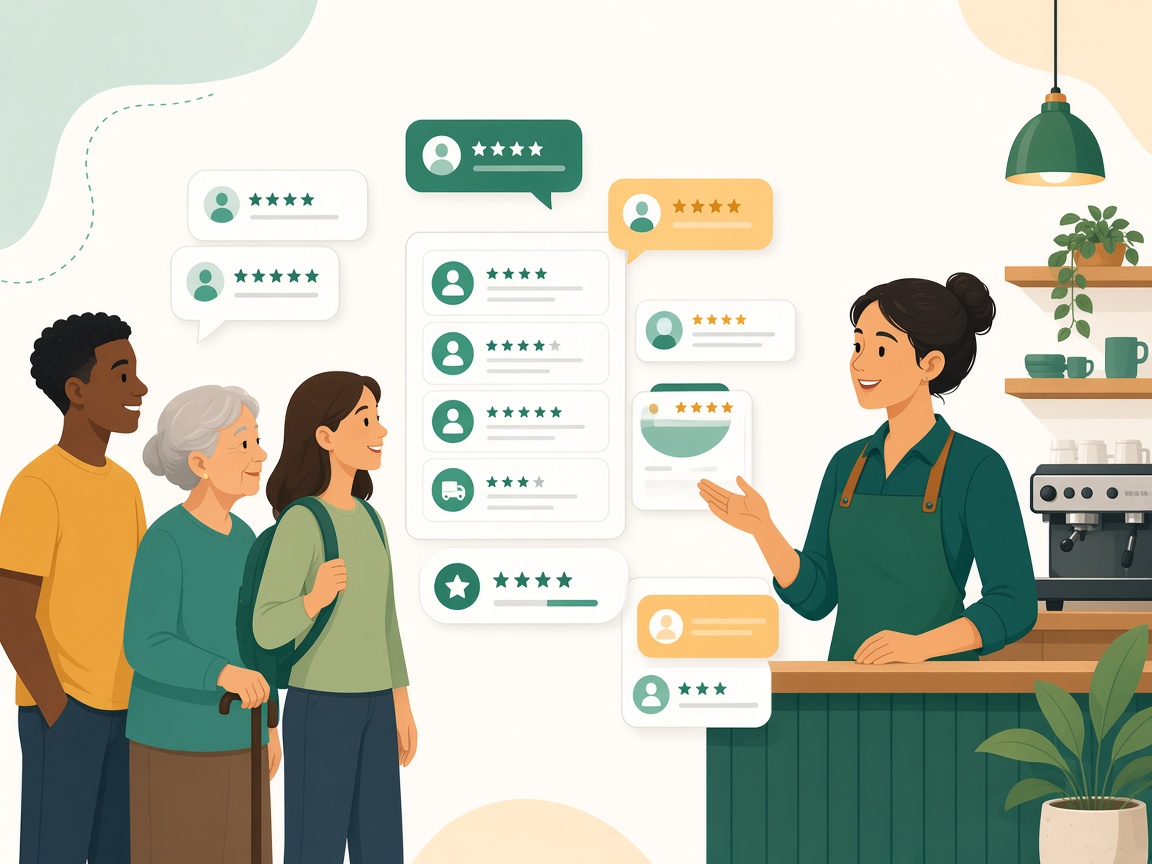
A bakery owner in Charlotte had been proud of her Saturday pastry case. She should have been. What she could not see until the reviews were grouped was that four-star reviews kept mentioning parking in passing. Nobody made a scene. They just mentioned it often enough that it was quietly sending weekend customers somewhere easier. She added the side-lot directions to her Google listing and a small sign out front. The parking mentions dropped. Saturday tickets did not.
That is connection. Not a chatbot on your website. Hearing what your customers have already told you.
Seeing where you stand
A 4.6 means very different things on different blocks. In one neighborhood it is the leader. Two streets over, three shops sit at 4.8 and your 4.6 is the one people skip.
Without local context, owners guess. They overreact to a single loud review. They invest in a menu change when the market is actually complaining about wait times everywhere — and the shop that fixed wait times is the one filling up.
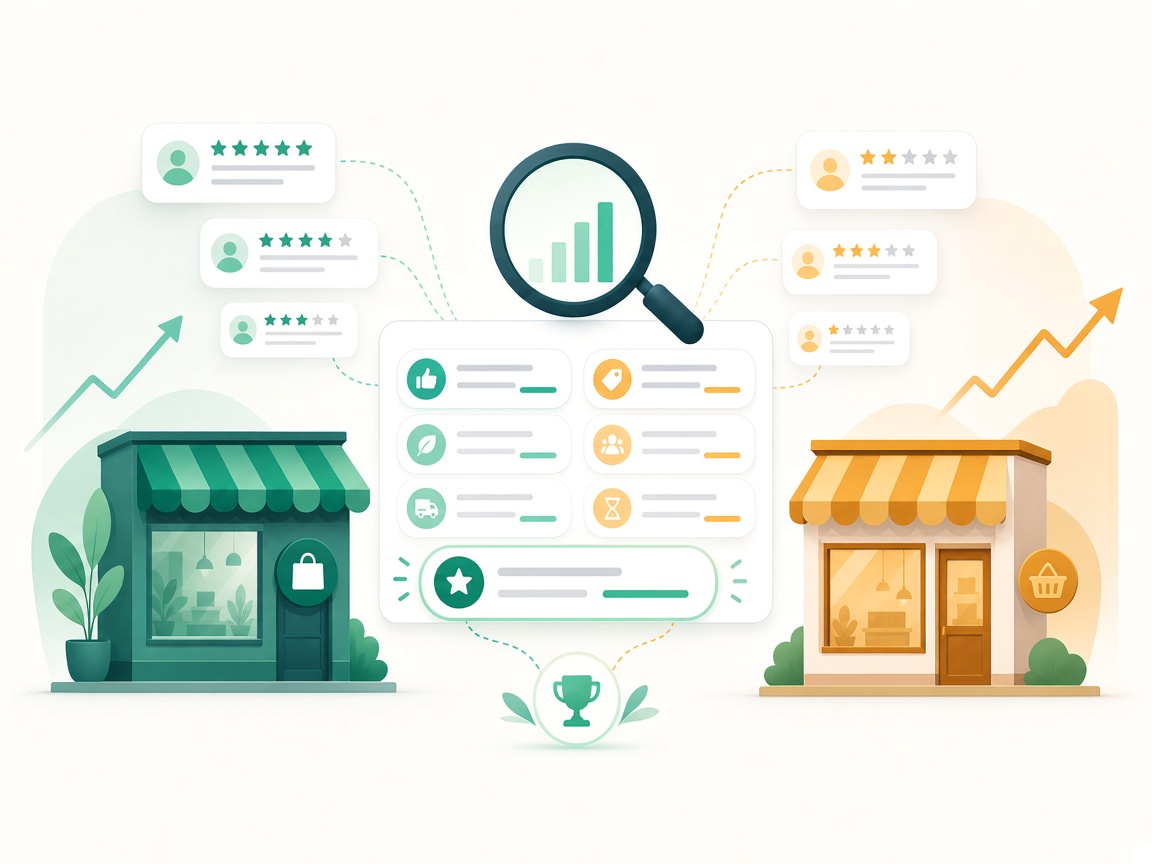
Seeing where you stand is simpler than a ranking. It is three questions:
- What do customers mention about you more positively than they do about similar places nearby?
- What does every decent option in your category already get praised for — the table stakes?
- Where are you quieter than the rest of the block?
A yoga studio owner in Nashville thought her differentiator was the room — the light, the plants, the good speakers. When she saw her reviews next to four nearby studios, the room barely came up. What came up was that her 6 a.m. teacher remembered names. The studios that "won" on vibe still lost people who wanted to be recognized. She stopped spending on a sound-system upgrade and put that teacher on the two busiest mornings. Retention moved. The reviews followed.
You cannot make that call from your own star rating alone.
Listening to what customers say about other businesses
Your neighbors' customers are writing in public. They say what they loved, what annoyed them, and what they wish someone nearby would finally do.
That is not a reason to copy a neighbor. It is a reason to listen to a much larger group of customers than will ever fill out your survey.
Three things show up again and again:
Recurring complaints. If three busy restaurants on the same street get dinged for slow weekend service, the shop that is actually fast owns that conversation.
Repeated praise. If every well-reviewed coffee shop nearby is celebrated for friendly baristas and working outlets, those are no longer differentiators. They are the minimum.
The "I wish they had." "Loved it, wish they took reservations." "Great class, wish it started earlier." When the same wish appears across several shops and nobody is meeting it, that is a gap in the whole local market.
A food truck operator in Matthews saw this on delivery apps. His Google reviews were glowing. DoorDash customers — including people who also reviewed two other trucks — kept asking for a way to reheat the crunch. He changed the wrap and added a small card. Delivery ratings moved in two weeks. He would not have prioritized that if he had only been reading his own Google page.
AI tools make this realistic for an owner-operator. You do not have a weekend to read five competitors across four platforms. You need the themes, the wishes, and what's changing.
What to do this month
You do not have to rebuild the business. You have to stop listening in fragments.
- List every place customers already write about you — Google, Yelp, Facebook, the booking app, the delivery app.
- Pick three to five businesses your customers actually compare you to.
- Use a tool that puts those reviews in one place and groups them by theme, not by star rating.
- Once a week, look at three things: what your customers mentioned most, where you lead or trail nearby shops, and one wish showing up on other pages that you could own.
Do that for a month and you will know more about your market than a year of Sunday skimming.
You don't need to become a technologist
The useful part of AI for a local business is not generating captions. It is making customer feedback usable when you have a line at the register.
Tools like FeedbackLedger exist for that job: connect you with what your customers are saying, show you where you stand locally, and let you hear what people tell the other businesses they also visit. That is the work that used to require a chain's analyst team. It does not anymore.
The shops that treat this as optional will still be guessing. The shops that treat it as part of running the place will hear the market first.